
Oct 27, 2026
DOE Diesel Up 7.6 Cents to $6.352, WTI Crude Up 13% on the Week
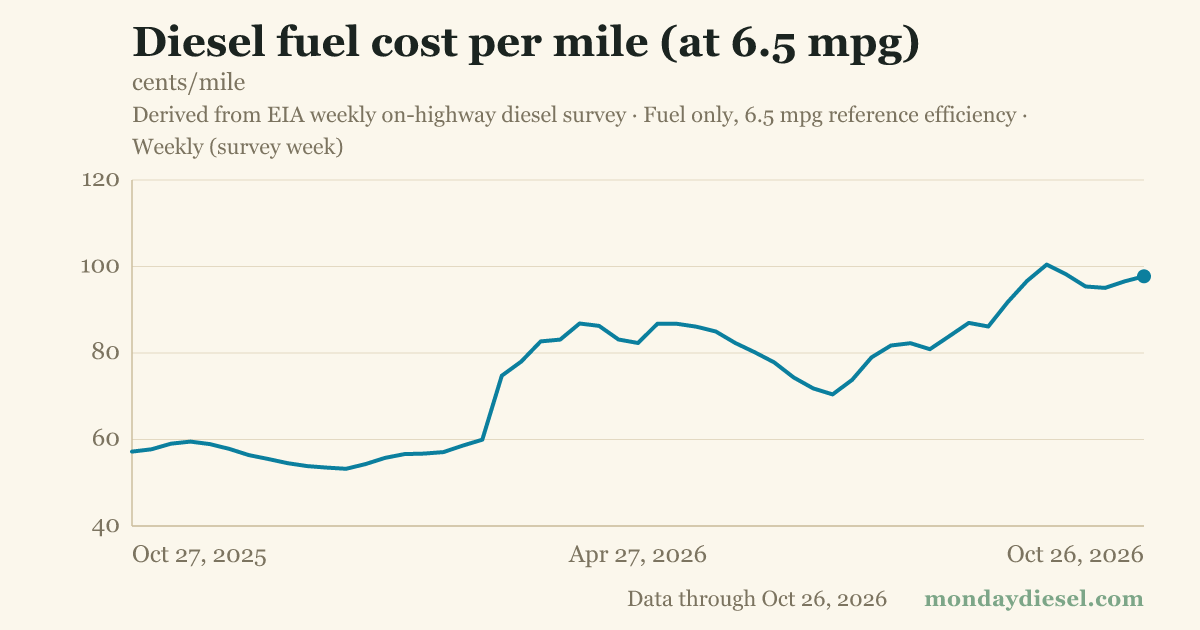
DOE diesel priced at $6.352/gal for the week of Oct. 26, up 7.6 cents. At the stated 6.5 mpg reference that's 97.7 cents a mile. WTI crude rose 13% on the week to $107.89/bbl while Brent fell 8% to $115.22/bbl.
Numbers as of Oct 27, 2026 pull
Cite
The Monday number, the morning it posts
Get Monday Diesel in your inbox every Tuesday. No spam, we won't ever share your email, and you can always unsubscribe.
The EIA weekly on-highway diesel survey priced the week of Oct. 26 at $6.352/gal, up 7.6 cents on the week. At the stated 6.5 mpg reference that is 97.7 cents a mile of fuel cost, and the move adds about $5.85 to a 500-mile haul.
- Midwest (PADD 2): $6.480/gal, up 2% from the prior week, 74% above the five-year median.
- Rocky Mountain (PADD 4): $6.521/gal, up 2% week over week, 73% above the five-year median.
- WTI crude (Cushing spot): $107.89/bbl as of Oct. 20, up 13% on the week per EIA's daily spot series. Crude accounts for roughly half the cost of a gallon of diesel, and a move this size reaches the pump with a lag of days to weeks.
- Brent crude (Europe spot): $115.22/bbl as of Oct. 20, down 8% on the week per EIA's daily spot series, moving in the opposite direction from WTI over the same period.
- West-vs-Gulf gap: the West Coast (PADD 5) at $7.329/gal pays 137.8 cents/gal above the Gulf Coast (PADD 3) at $5.951/gal.
- California: $8.155/gal, down 1% week over week, 65% above the five-year median.
EIA's daily ULSD spot series shows New York Harbor at $5.265/gal and the Gulf Coast at $4.962/gal, both dated Oct. 20. These are untaxed bulk wholesale prices, not pump prices, and both predate the Monday retail survey by six days.
Per EIA's Oct. 22, 2026 "Today in Energy," U.S. refineries averaged more than 95% of capacity from May through September 2026, the highest for those months since 1998, with tight global distillate supplies cited as the driver. Distillate demand peaks in fall and winter, per that release, and this issue falls in fall harvest season, the period of peak agricultural trucking demand.
The US index stands 71% above the five-year median.